


Last month we discussed why understanding On-Page SEO is essential, and now it’s time to go deeper into this topic. On-site optimization is a fundamental part of any forex trading SEO strategy. Without proper SEO forex implementation and well-researched keywords forex trading, even high-quality content will struggle to reach top Google rankings.
Every forex website aims to appear on the first page of search results. However, achieving this goal requires a clear and consistent forex SEO strategy. Below, we explain the most important on-site SEO elements for forex websites and how they help improve visibility, rankings, and user engagement.
Each element contributes to stronger SEO for forex brokers and traders alike. While on-site SEO is only one part of a complete digital marketing strategy (along with technical SEO and off-page SEO), it is the foundation you cannot ignore.
Your competitors are already optimizing their forex trading SEO — so let’s get started.

Forex Trading SEO: The Importance of the Perfect Title
Titles are one of the most critical on-site SEO elements because they target both Google search bots and users. A strong title clearly describes your content while naturally integrating your keywords forex.
The perfect title for a forex-related post should:
- Accurately reflect the topic
- Be engaging for users
- Include a primary keyword related to SEO forex or forex trading SEO
Effective titles are usually short (up to 50–60 characters), specific, and focused. Many high-ranking forex websites use questions or benefit-driven titles to increase click-through rate. Before choosing a title, research competitors in Google and analyze how they use forex trading keywords.
Your title is the first interaction users have with your forex website, so it should always be unique, relevant, and aligned with your brand identity.
SEO Forex Optimization: Writing an Effective Meta Description
When multiple websites target the same keywords forex trading, titles often look similar in search results. This is where the meta description becomes essential.
Search engines allow up to 160 characters for your meta description, giving you space to clearly explain your content and stand out. A well-written description can significantly improve CTR and reduce bounce rate.
Types of Meta Descriptions to Avoid and Use
Avoid: Keyword stuffing without meaning
Example:
“Forex market. Trading platform. Brokers. Currency trading. Forex CRM…”
This confuses users and damages trust.
Acceptable: Extract from the content
Using a sentence from the body text works, but ensure the wording actually exists on the page to avoid misleading users.
Best practice: Specific and user-focused description
Clearly explain what the article offers, include one or two keywords forex, and keep sentences simple and readable.
Using SEO plugins like Yoast can help optimize meta descriptions for SEO forex best practices.
SEO-Friendly URLs for Forex Websites
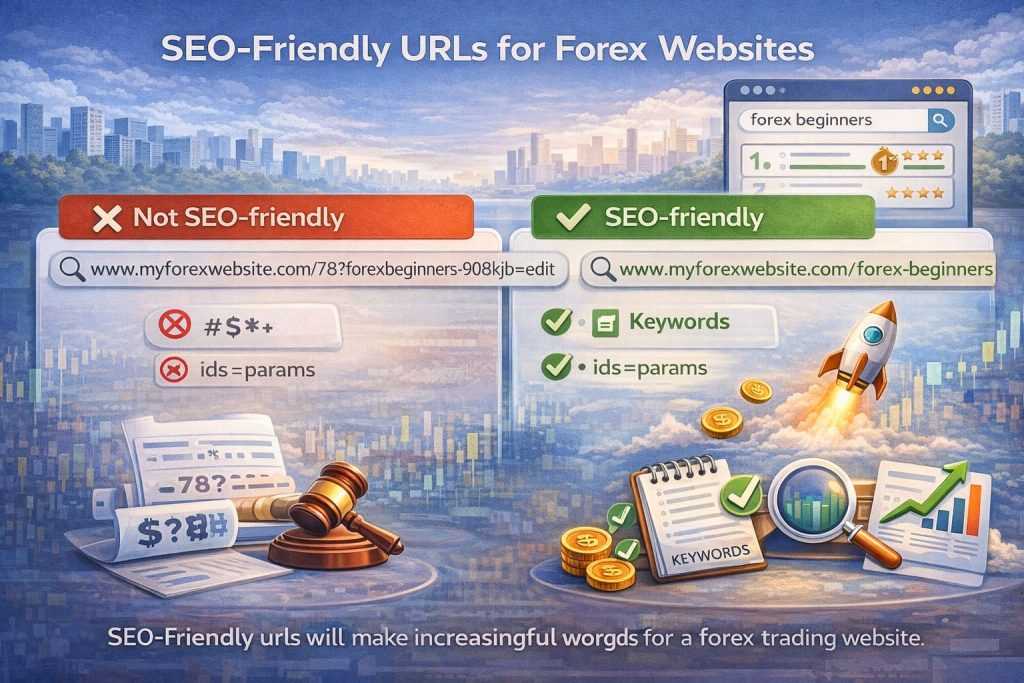
Although users rarely pay attention to URLs, search engines do. Clean, readable URLs are an important ranking factor in forex trading SEO.
Not SEO-friendly:www.myforexwebsite.com/78?forexbeginners-908kjb=edit
SEO-friendly:www.myforexwebsite.com/forex-beginners
Short, descriptive URLs help Google understand page relevance and improve crawlability. Always include meaningful words related to your keywords forex trading and avoid unnecessary parameters.
Keywords Forex Trading: Building a Strong Keyword Strategy
Keyword research is the backbone of SEO forex. Users rely on keywords to find information, and search engines rely on them to understand your content.
Because search trends change, keyword research must be reviewed regularly. Tools such as Google Keyword Planner, SEMrush, and Google Trends help identify high-potential forex trading keywords.
Forex Keyword Market
Each industry has its own keyword ecosystem. In the forex niche, common examples include:
- Trading platform
- Forex CRM
- Currency exchange rates
- Foreign exchange transactions
Focus on medium-competition keywords and long-tail keywords forex trading, as highly competitive terms are harder to rank for without strong authority.
On-Page SEO Strategy for Forex Websites
Keywords should always be used strategically. Overusing them leads to penalties and poor readability.
For effective forex trading SEO:
- Place the main keyword in the first paragraph
- Use keywords in H2 and H3 headings
- Maintain natural keyword density (around 2–3%)
- Use variations and LSI keywords such as forex SEO strategy, SEO for forex brokers, and on-page SEO for forex websites
Natural language is critical — write for users first, search engines second.
Bounce Rate and User Experience in SEO Forex
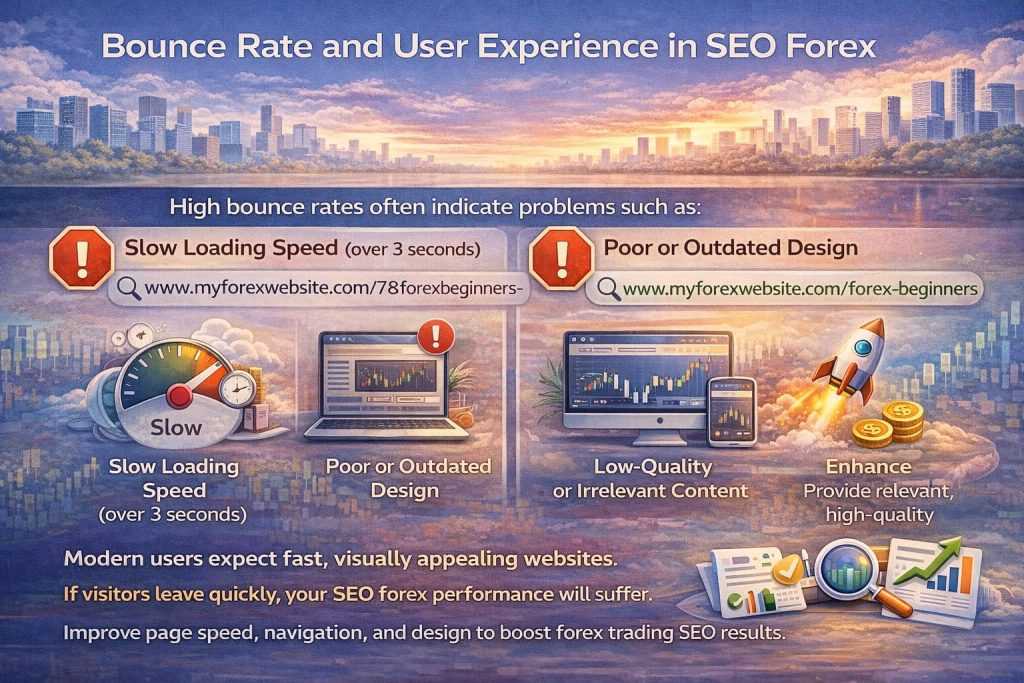
High bounce rates often indicate problems such as:
- Slow loading speed (over 3 seconds)
- Poor or outdated design
- Low-quality or irrelevant content
Modern users expect fast, visually appealing websites. If visitors leave quickly, your SEO forex performance will suffer.
Use tools like Google Analytics to track bounce rate and user behavior. Improving page speed, navigation, and design can dramatically improve forex trading SEO results.
Final Thoughts: On-Site SEO Elements for Forex Websites
On-site optimization is the foundation of a successful forex trading SEO strategy. By focusing on titles, meta descriptions, SEO-friendly URLs, well-researched keywords forex, and strong user experience, you significantly increase your chances of ranking higher in search engines.
A consistent and well-executed SEO forex approach will help your forex website attract qualified traffic, reduce bounce rate, and achieve sustainable long-term growth.
Request a Consultation on On-Site SEO Strategy for Forex Websites
Get expert guidance on building an effective on-site SEO strategy for your forex website. We’ll help you evaluate titles, meta descriptions, URLs, keyword usage, and user experience factors to improve visibility, engagement, and organic traffic growth.
Together, we’ll review your current SEO approach and outline a strategy that aligns with your market, competition, and long-term marketing goals.