


DXtrade is a multi-asset white-label trading platform developed by Devexperts — a global software development company serving the capital markets industry since 2002. The platform was launched in 2020 and has since been adopted by brokerages and proprietary trading firms across forex, CFD, crypto, and futures markets. Unlike platforms that originated in the retail trading space, DXtrade was designed from the outset as a configurable, broker-facing infrastructure product — built to be white-labeled, integrated with existing systems, and deployed at scale.
This guide covers how DXtrade is structured, what it provides operationally, and how brokers and prop firms deploy it in practice.
The Three DXtrade Platform Variants
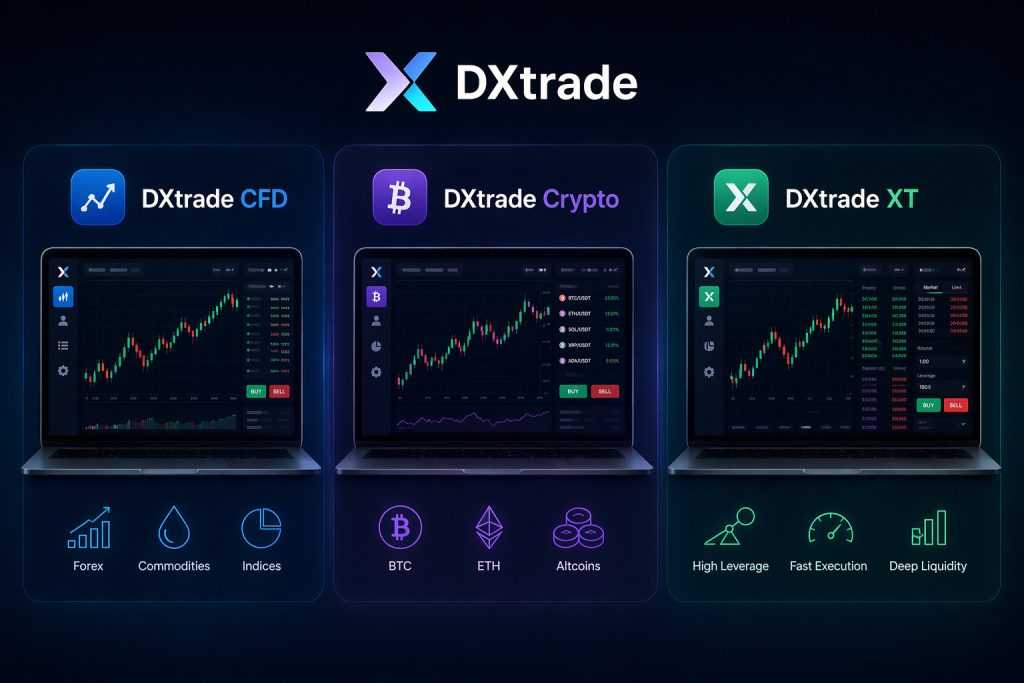
DXtrade is not a single product — it is a family of three distinct platforms, each designed for a specific market segment and asset class configuration.
DXtrade CFD
DXtrade CFD is designed for brokers offering forex, contracts for difference, spread bets, and crypto. It is the most widely deployed variant among retail forex brokers and the platform most prop firms using DXtrade run for forex and CFD challenges. The platform is delivered as a turnkey product — fully hosted and supported by Devexperts, with a go-to-market timeline of approximately seven days from setup to live deployment.
DXtrade CFD includes a built-in broker administration interface covering client group management, exposure monitoring, dealing settings, price stream management, and real-time P&L visibility. For prop firm operators, the platform supports configurable challenge rules, account position limits, automated position liquidation at session end, and real-time trader performance monitoring — the same parameters covered in detail in the guide on how to design a prop firm challenge.
DXtrade Crypto
DXtrade Crypto is a dedicated platform variant for brokers and prop firms operating in the cryptocurrency market. It supports margin and spot crypto trading across a wide range of digital assets, including perpetuals — a contract type increasingly in demand among crypto-focused prop trading firms. The platform includes the same white-label architecture and risk management infrastructure as DXtrade CFD, adapted for the specific requirements of crypto market structure.
DXtrade XT
DXtrade XT is the multi-asset variant covering stocks, options, futures, ETFs, mutual funds, and bonds — in addition to the asset classes supported by DXtrade CFD. Devexperts announced futures support for prop firms in August 2024, with DXtrade XT’s prop trading configuration going live in September 2024. The platform supports CME futures for US-facing prop firms, Reg T and options margin on equities, and CME SPAN margining for futures and futures options.
DXtrade XT is particularly relevant for prop firms expanding beyond forex and CFDs into futures — a growing trend as US market access becomes more strategically important for prop firm operators. CFDs are not permitted for US residents, making futures the primary instrument for firms that want to serve the US trader base.
Key Features of the DXtrade Platform
Browser-Based, No Installation Required
DXtrade operates entirely through a web browser and mobile app — there is no desktop application and no software installation required for traders. This significantly reduces the onboarding friction for new traders, who can access their account and begin trading immediately after registration. For prop firm operators, this also eliminates the platform compatibility issues that arise with desktop-based trading software across different operating systems and device configurations.
White-Label Architecture
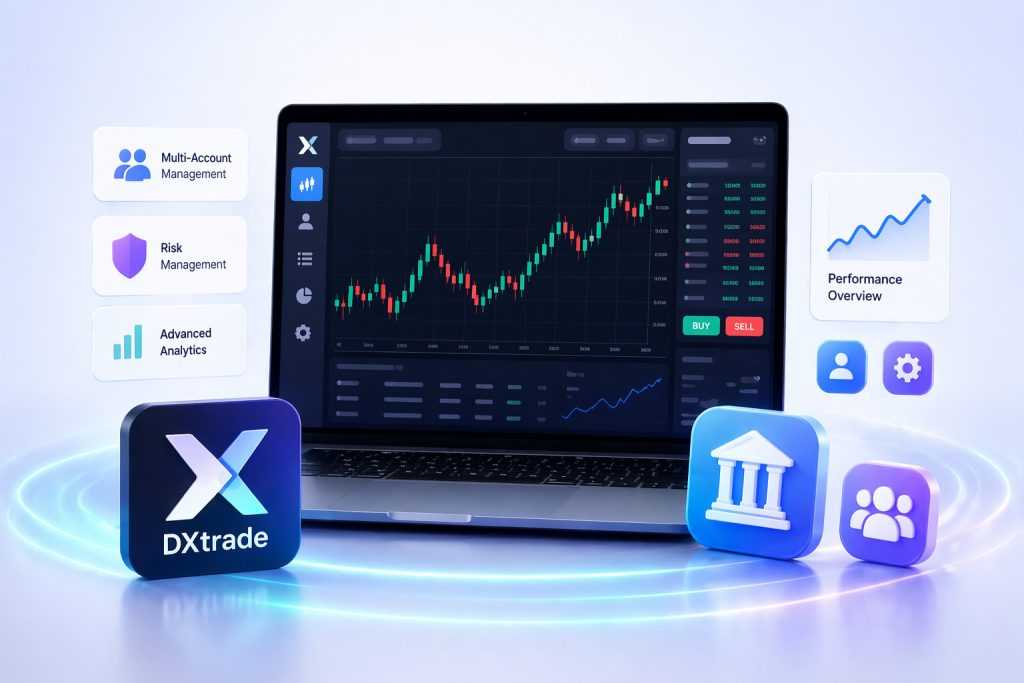
DXtrade is built for white-label deployment — brokers and prop firms can fully brand the trading environment under their own name, logo, color scheme, and domain. The platform’s modular design allows operators to select the components they need and integrate them into their existing infrastructure, or deploy the full platform as a standalone product. This flexibility makes DXtrade suitable for both early-stage operators launching for the first time and established brokers upgrading from legacy infrastructure.
TradingView Integration
DXtrade CFD includes native TradingView integration out of the box — traders access TradingView’s charting tools directly within the DXtrade interface without switching platforms or maintaining separate subscriptions.
For brokers, this eliminates the need to license and integrate TradingView separately, and for traders familiar with TradingView’s chart layout and analysis tools, it removes the learning curve associated with moving to a new platform environment.
Risk Management Infrastructure
DXtrade includes a built-in real-time exposure monitor and risk management layer for broker administrators. Individual dealing settings can be configured per client group and instrument — spreads, markups, position limits, and margin requirements are all managed from the admin interface without requiring platform-level code changes. For prop firm operators, challenge parameters — profit targets, drawdown limits, maximum daily loss, consistency rules — are enforceable at the platform level, with automated actions triggered when thresholds are crossed.
Automated Trading and API Access
DXtrade provides a client-side API for integration with external systems — CRM platforms, payment processors, compliance tools, and liquidity providers. Traditional Expert Advisors in the MetaTrader sense do not run on DXtrade — the platform does not support the MQL scripting environment. However, Devexperts has indicated that scripting capability is in development. For operators evaluating execution model architecture alongside platform selection, see the breakdown of A-book vs B-book vs hybrid execution models.
Trading Contests and Leaderboards
DXtrade includes integrated trading contest software with fully adjustable settings, leaderboards, and shareable results. For prop firm operators, this provides infrastructure for running competitions alongside standard challenge programs — without requiring third-party software. Competitions and leaderboards have become an established engagement tool for prop firms looking to retain funded traders and generate community activity around the platform.

How Prop Firms Use DXtrade
Prop firms deploy DXtrade as the trading environment for both evaluation challenges and funded accounts. The platform’s built-in prop trading infrastructure — configurable challenge rules, real-time rule enforcement, automated breach detection, and trader performance monitoring — allows operators to run evaluation programs without building custom rule enforcement logic on top of a generic trading platform.
As of 2024, Devexperts reported onboarding approximately 40 proprietary trading firms to its FX and CFD platform in the preceding year — a figure that reflects DXtrade’s growing adoption in the prop trading space. FTMO, one of the most recognised prop trading firms globally, lists DXtrade among its supported platforms alongside MetaTrader and other alternatives. Kenmore Design works with DXtrade as a technology partner, providing brokers and prop firms with CRM and back-office infrastructure connected to the DXtrade trading environment.
| Prop Firm | DXtrade Variant | Other Platforms |
|---|---|---|
| FTMO | DXtrade CFD | MT4, MT5, cTrader |
| Alpha Capital Group | DXtrade CFD | cTrader, MT5, TradeLocker |
| Funded Trading Plus | DXtrade CFD | cTrader, Match-Trader, MT5 |
| Ment Funding | DXtrade CFD | cTrader, Match-Trader |
| Tradeify Crypto | DXtrade Crypto | — |
For prop firms, the operational benefit of DXtrade is the combination of white-label branding, built-in challenge rule enforcement, and browser-based access — which reduces the onboarding friction that desktop platform installation creates for new traders. For a detailed look at how chargeback risk affects prop firm economics regardless of platform choice, see the guide on the prop firm chargeback problem and revenue protection.
How Brokers Use DXtrade
For retail forex and CFD brokers, DXtrade provides a complete trading infrastructure alternative to legacy desktop platforms. The platform’s turnkey deployment model — with Devexperts handling hosting, maintenance, and updates — reduces the operational overhead associated with running trading platform infrastructure internally.
Key broker-facing capabilities in DXtrade include:
- Client group management — different trading conditions, spreads, and margin requirements configurable per client segment
- Liquidity connectivity — integration with the broker’s chosen liquidity provider, with price stream management and stale quote handling built into the admin interface
- Exposure monitoring — real-time P&L and position exposure visible to risk managers without switching systems
- Compliance integration — the platform is designed to integrate with brokers’ existing compliance and KYC systems via API
- Multi-jurisdictional deployment — DXtrade has been deployed by CySEC-regulated brokers and operators in other regulated jurisdictions, with Devexperts providing support for jurisdiction-specific configuration requirements
For brokers evaluating how platform choice intersects with regulatory requirements, the overview of global regulatory risks for prop firms and brokers covers the key jurisdictional considerations that affect infrastructure decisions.

Request a Consultation on DXtrade Infrastructure Strategy
Get expert guidance on evaluating whether DXtrade aligns with your brokerage or prop firm’s execution model, asset offering, and regulatory positioning. We’ll help you assess platform configuration, white-label structure, risk controls, and CRM integration before committing to deployment.
Together, we’ll review your current stack and outline a platform strategy built for scalability and operational control.