


A PSP aggregator is one of the most widely used models in modern online payment processing. Instead of opening a direct merchant account with an acquiring bank, businesses operate under a master merchant account managed by a PSP aggregator.
This structure allows companies to launch faster, simplify compliance, and centralize payment operations. For startups, SaaS platforms, e-commerce brands, marketplaces, and cross-border businesses, the PSP aggregator model often becomes the foundation of their payment infrastructure.
This guide explains the PSP aggregation model in depth — including how it works, practical use cases, high-risk considerations, limitations, and how it compares to gateways, processors, and dedicated merchant accounts.
What Is a PSP Aggregator?
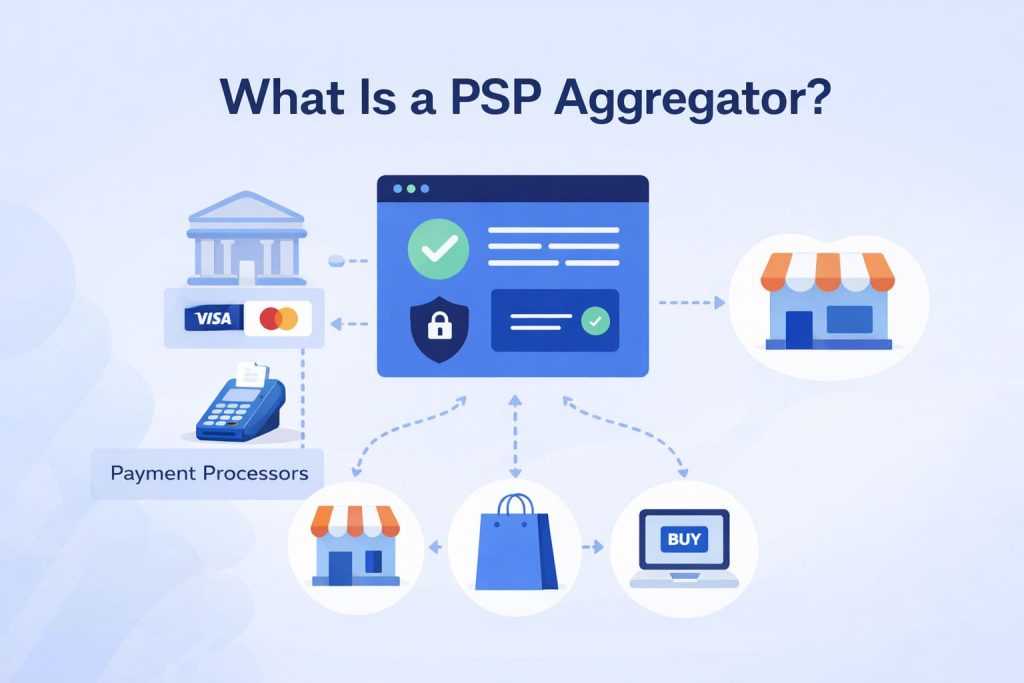
A PSP aggregator (Payment Service Provider aggregator) is a fintech platform that enables multiple merchants to process electronic payments under a single master merchant account.
Instead of each business building separate relationships with:
- Acquiring banks
- Payment processors
- Card networks
- Compliance and underwriting teams
the PSP aggregator manages those relationships centrally.
Merchants are onboarded as sub-merchants within the aggregator’s infrastructure. The PSP aggregator handles onboarding, underwriting, transaction routing, settlement, fraud monitoring, and regulatory compliance.
This model is closely related to the payment facilitator (payfac) structure. In most cases, a PSP aggregator operates under a payfac license and assumes responsibility for KYC, AML compliance, and ongoing risk monitoring.
How the PSP Aggregator Model Works
The PSP aggregator model removes much of the traditional friction in payment processing.
Merchant Onboarding and Risk Assessment
A business submits corporate documents, ownership information, banking details, and a description of products or services. The PSP aggregator performs:
- Identity verification (KYC)
- Anti-money laundering screening (AML)
- Industry risk assessment
- Basic underwriting
Because merchants are onboarded under a master account, approval is typically much faster than opening a dedicated merchant account.
Single Integration Infrastructure
After approval, the merchant integrates through:
- API
- Hosted checkout
- E-commerce plugins
- Mobile SDK
With one technical integration, the PSP aggregator can enable:
- Credit and debit cards
- Digital wallets
- Alternative payment methods
- Bank transfers
- Recurring billing
This unified approach eliminates the need for multiple processor integrations.
Transaction Routing and Authorization Optimization
When a customer submits payment:
- Payment data is encrypted and tokenized.
- The PSP aggregator routes the transaction to an acquiring partner.
- The issuing bank authorizes or declines.
- The response is returned instantly.
More advanced PSP aggregator platforms use multi-acquirer setups and intelligent routing logic to improve authorization rates. This approach is often referred to as a lightweight payment orchestration layer.
Settlement and Fund Distribution
Funds move from the issuing bank to the acquiring bank, then to the PSP aggregator. The aggregator settles funds to the merchant’s bank account based on predefined payout schedules.
Some PSP aggregators apply rolling reserves or delayed settlements to manage chargeback exposure.
Practical Example: How a PSP Aggregator Enables Fast Expansion
Consider a SaaS company launching in five countries.
Without a PSP aggregator, the company would need to:
- Open five separate merchant accounts
- Negotiate with multiple acquirers
- Handle local compliance requirements
- Integrate multiple processors
With a PSP aggregator, the company can:
- Complete one onboarding process
- Integrate once via API
- Enable cross-border payments
- Accept multiple currencies
- Manage reporting from a single dashboard
This significantly reduces time-to-market and operational overhead.
Why Businesses Choose a PSP Aggregator
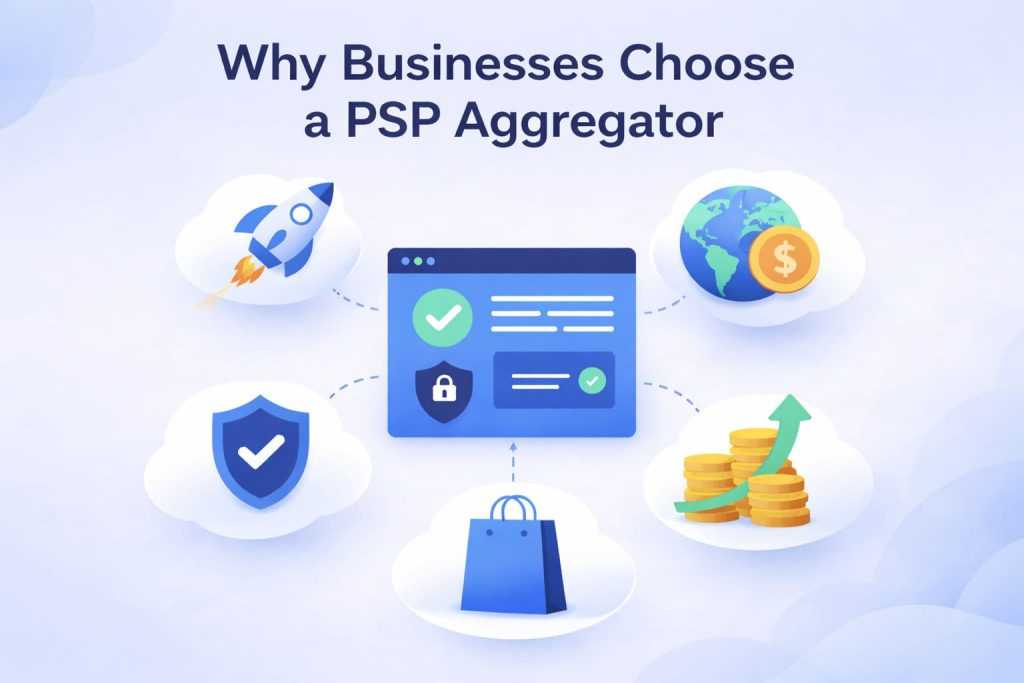
A PSP aggregator solves structural problems in online payment infrastructure.
Faster Go-Live
Onboarding is significantly quicker than traditional acquiring.
Simplified Compliance
The PSP aggregator manages PCI scope and regulatory obligations at scale.
Centralized Payment Infrastructure
One integration replaces multiple technical and banking relationships.
Multi-Payment Method Enablement
Merchants can accept cards, wallets, and alternative methods immediately.
Scalability
The PSP aggregation model supports growth without rebuilding infrastructure.
Reduced Operational Complexity
Settlement, reporting, and monitoring are centralized.
PSP Aggregator for High-Risk and Growing Merchants
Not all PSP aggregators support high-risk verticals, but some are structured to manage elevated risk profiles.
Industries that often rely on PSP aggregator setups include:
- Subscription-based services
- Digital goods platforms
- Marketplaces
- Cross-border e-commerce
High-risk merchants must carefully review:
- Chargeback thresholds
- Reserve requirements
- Industry restrictions
- Account suspension policies
Because merchants share a master account, exceeding acceptable risk limits may result in temporary holds or termination.
Choosing a PSP aggregator aligned with your industry is critical.
Limitations of the PSP Aggregation Model
While the PSP aggregator model offers flexibility, it introduces trade-offs.
Limited Customization
Merchants depend on the aggregator’s routing and underwriting decisions.
Shared Risk Structure
Risk exposure is managed at the portfolio level.
Pricing at Scale
At high transaction volumes, interchange-plus pricing through a dedicated merchant account may be more cost-efficient.
Reserve Policies
Rolling reserves are common, especially for new or higher-risk merchants.
For early-stage companies, the advantages often outweigh these constraints. For enterprise-scale operations, hybrid or direct acquiring models may eventually become more suitable.
PSP Aggregator vs Payment Gateway vs Payment Processor
Understanding the differences clarifies the role of a PSP aggregator.
A payment gateway securely transmits transaction data between the merchant and processor. It focuses on encryption and communication.
A payment processor executes the authorization and moves funds between issuing and acquiring banks.
A PSP aggregator combines onboarding, compliance management, routing relationships, settlement handling, and reporting into a unified infrastructure layer. In many cases, it bundles gateway and processing capabilities within one system.
In simplified terms:
- Gateway = secure data transport
- Processor = transaction execution
- PSP aggregator = integrated payment infrastructure
Common Misconceptions About PSP Aggregators
“A PSP aggregator is just a payment gateway.”
Incorrect. A PSP aggregator manages merchant accounts, settlement, and compliance — not just data transmission.
“PSP aggregators are only for small businesses.”
While popular with startups, many mid-sized and fast-growing companies rely on PSP aggregation before transitioning to hybrid models.
“All PSP aggregators support high-risk industries.”
Support varies significantly. Each PSP aggregator defines its own risk appetite.
“Using a PSP aggregator guarantees higher approval rates.”
Authorization improvements depend on routing strategy, acquiring partnerships, and transaction quality.
When a PSP Aggregator Is the Right Choice
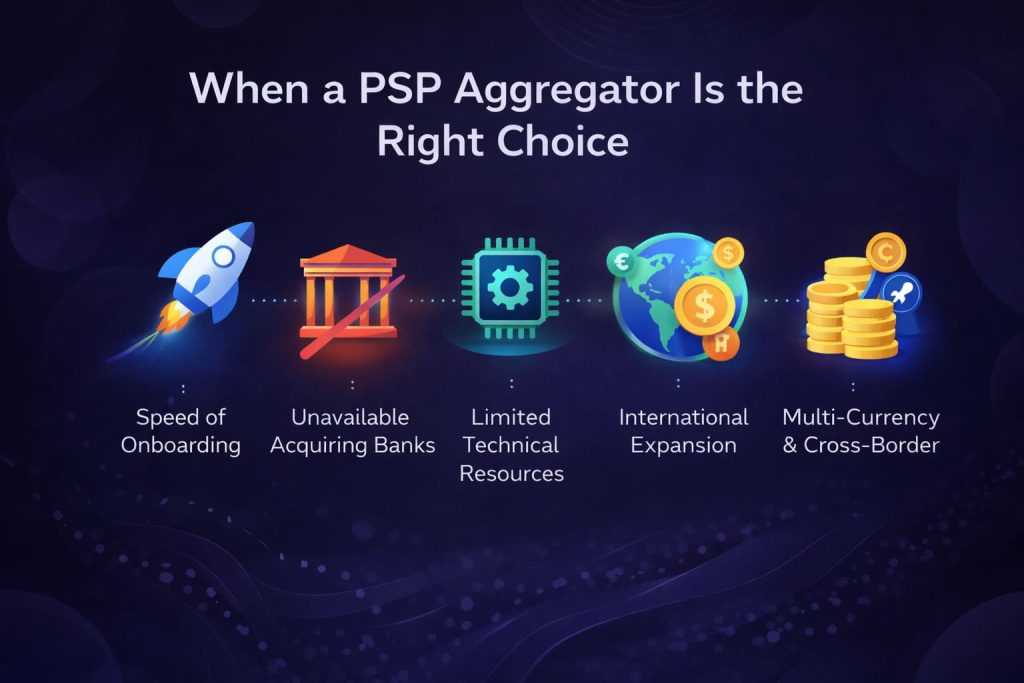
A PSP aggregator is typically ideal when:
- Speed of onboarding is critical
- Direct acquiring relationships are unavailable
- Technical resources are limited
- The business is expanding internationally
- Multi-currency and cross-border support is required
For many digital-first companies, the PSP aggregator model provides an efficient bridge between early growth and enterprise-scale payment architecture
How to Choose the Right PSP Aggregator
Before selecting a PSP aggregator, evaluate:
- Supported industries
- Geographic acquiring coverage
- Multi-acquirer capabilities
- Settlement timelines
- Transparent fee structure
- Reserve policies
- Chargeback management procedures
- API flexibility and documentation quality
- Reporting and analytics depth
A reliable PSP aggregator should provide operational transparency, predictable risk management, and scalable infrastructure.
Final Thoughts
A PSP aggregator centralizes merchant onboarding, compliance, transaction routing, and settlement into one structured payment model.
For online businesses, the PSP aggregation model reduces complexity, accelerates launch timelines, and enables scalable payment processing without direct acquiring relationships.
However, the structure also introduces shared risk frameworks, reserve policies, and less customization compared to dedicated merchant accounts.
Understanding how a PSP aggregator works — including both its strengths and limitations — allows businesses to design a payment infrastructure aligned with growth strategy, risk profile, and long-term scalability.
Request a Consultation on PSP Aggregator Strategy
Get expert guidance on evaluating whether a PSP aggregator model fits your business structure, risk profile, and growth plans. We’ll help you assess onboarding speed, compliance exposure, reserve policies, and scalability trade-offs before committing to a payment architecture.
Together, we’ll review your payment strategy and outline an infrastructure approach aligned with operational stability and long-term expansion.