


Expert Step-by-Step Guide for Competitive Markets
Building a forex brokerage without a clear brand strategy is one of the most common reasons new brokers fail. The market is saturated, trust-sensitive, and highly competitive. Traders today evaluate brokerages not only by spreads or platforms, but by credibility, transparency, and consistency.
This guide explains how to build a forex brokerage brand from scratch, using a practical, experience-driven framework designed specifically for the forex and CFD industry.
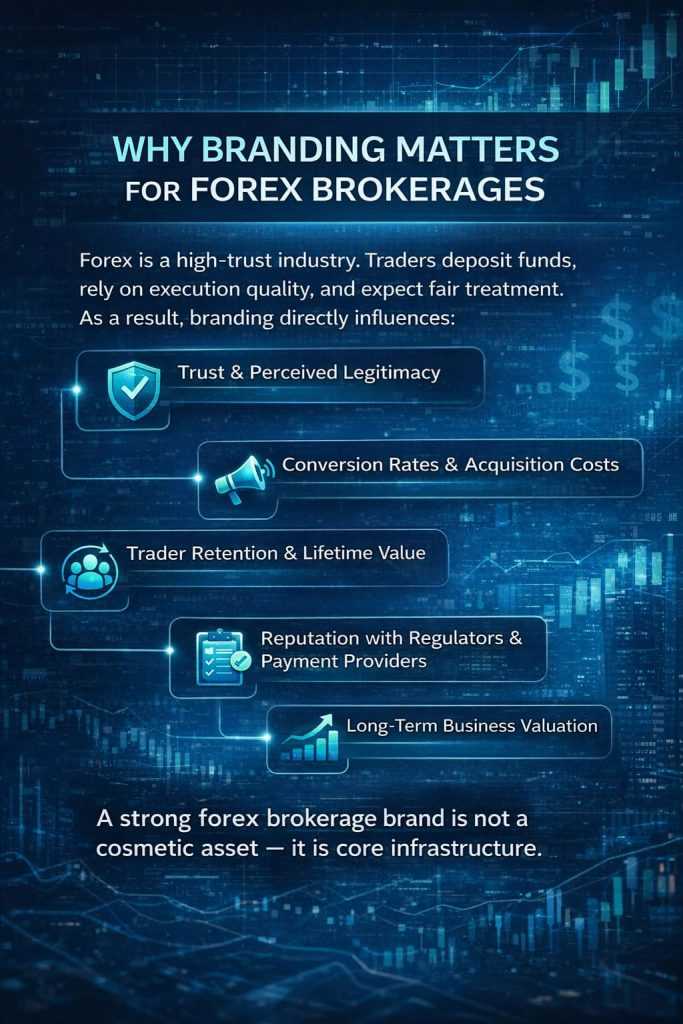
Why Branding Matters for Forex Brokerages
Forex is a high-trust industry. Traders deposit funds, rely on execution quality, and expect fair treatment. As a result, branding directly influences:
- Trust and perceived legitimacy
- Conversion rates and acquisition costs
- Trader retention and lifetime value
- Reputation with regulators and payment providers
- Long-term business valuation
A strong forex brokerage brand is not a cosmetic asset — it is core infrastructure.
Step 1: Define Your Forex Brokerage Brand Positioning
Before designing visuals or launching campaigns, you must define where your brokerage fits in the market.
Market and competitor analysis
Start with structured research:
- Analyze established global and regional forex brokers
- Identify overused positioning angles (e.g. “lowest spreads”)
- Review trader feedback, complaints, and unmet expectations
- Define a clear target trader profile (experience level, region, trading style)
Brand positioning answers a simple but critical question:
Why should a trader trust and choose your brokerage over competitors?
Clear positioning reduces marketing noise and improves message clarity.
Step 2: Define Mission, Vision, and Brand Values
Strong branding starts internally. Without clarity inside the organization, external communication becomes inconsistent.
Mission
What problem does your brokerage solve for traders?
Vision
What should your brokerage represent in the future?
Values
Which principles guide decisions around transparency, risk, support, and compliance?
These elements shape tone of voice, platform design choices, and client communication.
Step 3: Build a Trust-Focused Forex Brand Identity
In forex, visual identity directly affects perceived safety and professionalism.
Color and design psychology
- Blue → trust, security, regulation
- Green → growth, stability, long-term value
- Neutral and dark themes → professionalism and platform familiarity
Overly aggressive colors or gimmicky design often reduce credibility.
Logo and interface consistency
Your brand identity must work across:
- Website and landing pages
- Trader’s Room and dashboards
- Mobile applications
- CRM notifications and emails
Inconsistent visuals across systems quickly undermine trust.
Step 4: Define Brand Voice and Communication Standards
Modern forex branding prioritizes clarity over hype.
Effective broker communication should be:
- Professional and transparent
- Educational rather than promotional
- Consistent across marketing, onboarding, and support
Exaggerated promises increase legal, regulatory, and reputational risk.
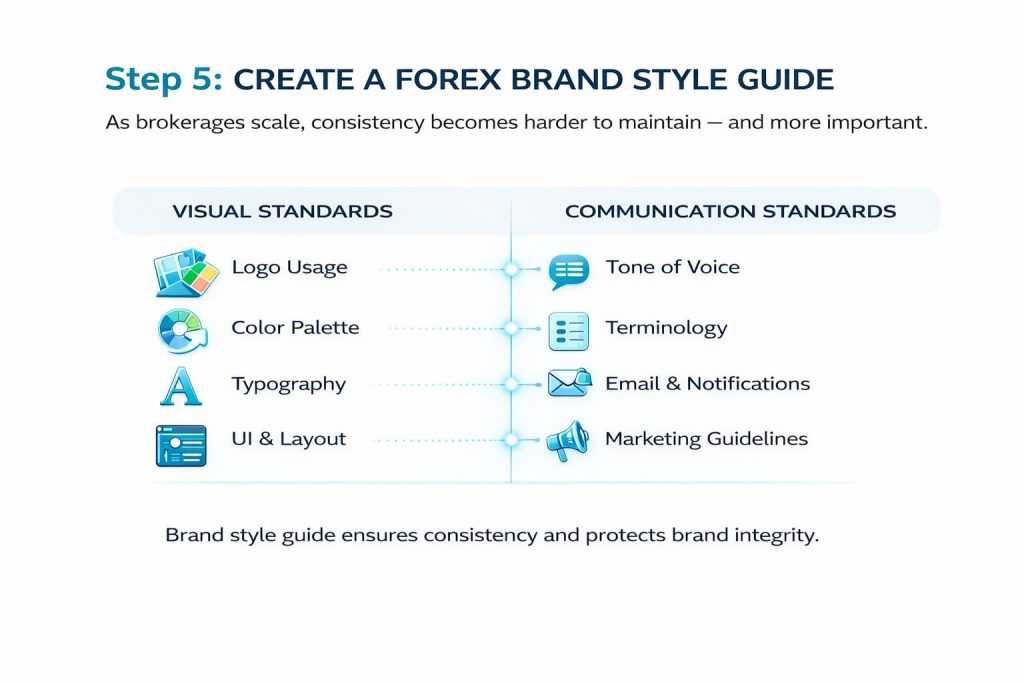
Step 5: Create a Forex Brand Style Guide
As brokerages scale, consistency becomes harder to maintain — and more important.
A professional brand style guide typically includes:
Visual standards
- Logo usage rules
- Color palette
- Typography
- UI and layout principles
Communication standards
- Tone of voice
- Approved terminology
- Email and notification structure
- Marketing and educational guidelines
This document protects brand integrity as teams and regions grow.
Step 6: Apply Branding Across the Entire Trader Journey
Brand perception is shaped by experience, not slogans.
Consistency must exist across:
- Website and registration
- KYC and onboarding
- Deposits and withdrawals
- Trading platforms
- Customer support interactions
- Ongoing communication
In forex, operational behavior is branding.
Step 7: Build Trust Through Operational Consistency
The strongest forex brands reinforce trust through actions:
- Clear execution and fee explanations
- Predictable withdrawal processes
- Fair and consistent rule enforcement
- Professional dispute handling
- Reliable customer support
These elements influence brand reputation more than advertising campaigns.
Common Branding Mistakes Forex Brokers Make
- Copying large brokers without differentiation
- Overpromising in marketing
- Inconsistent UI across systems
- Ignoring regional and cultural expectations
- Treating branding as a one-time task
Branding is an ongoing process that evolves with the business.
Final Thoughts
Understanding how to build a forex brokerage brand from scratch means recognizing that branding is closely tied to trust, transparency, and user experience.
Brokerages that invest in clear positioning, professional identity, and consistent operations are better positioned to attract quality traders, build long-term credibility, and scale sustainably.
FAQ: Forex Brokerage Branding
What is forex brokerage branding?
Forex brokerage branding is the process of defining positioning, identity, messaging, and trader experience to build trust and differentiation in the forex market.
Why is branding important for forex brokers?
Branding helps brokers build credibility, stand out in competitive markets, reduce acquisition costs, and improve trader retention.
Can a new forex brokerage build a strong brand?
Yes. Smaller brokerages can compete effectively by focusing on niche positioning, transparency, and consistent trader experience.
How long does it take to build a forex brokerage brand?
Brand foundations can be created in months, but strong recognition and trust develop over time through consistent execution.
What is the biggest branding mistake forex brokers make?
Overpromising in marketing while underdelivering in platform performance, support quality, or operational transparency.
Request a Consultation on Building a Forex Brokerage Brand
Get expert guidance on building a strong, recognizable brand for your forex brokerage from the ground up. We’ll help you clarify your positioning, define your mission and values, and align visual identity and messaging with your target market.
Together, we’ll review your goals and outline a brand strategy that builds trust, differentiation, and long-term growth in a competitive forex landscape.