


In the proprietary trading industry, reputation is a direct reflection of operational integrity. For this reason, reputation management for prop trading firms should be approached as a governance and risk discipline supported by structured systems such as a prop firm crm, rather than treated as a marketing activity.
Prop trading firms operate in a highly transparent environment where trader evaluations, payout decisions, and rule enforcement are continuously discussed across public forums, review platforms, and private trading communities. Without centralized operational control, inconsistent processes, unclear enforcement logic, or unresolved disputes can quickly translate into reputational damage and long-term loss of trader trust.
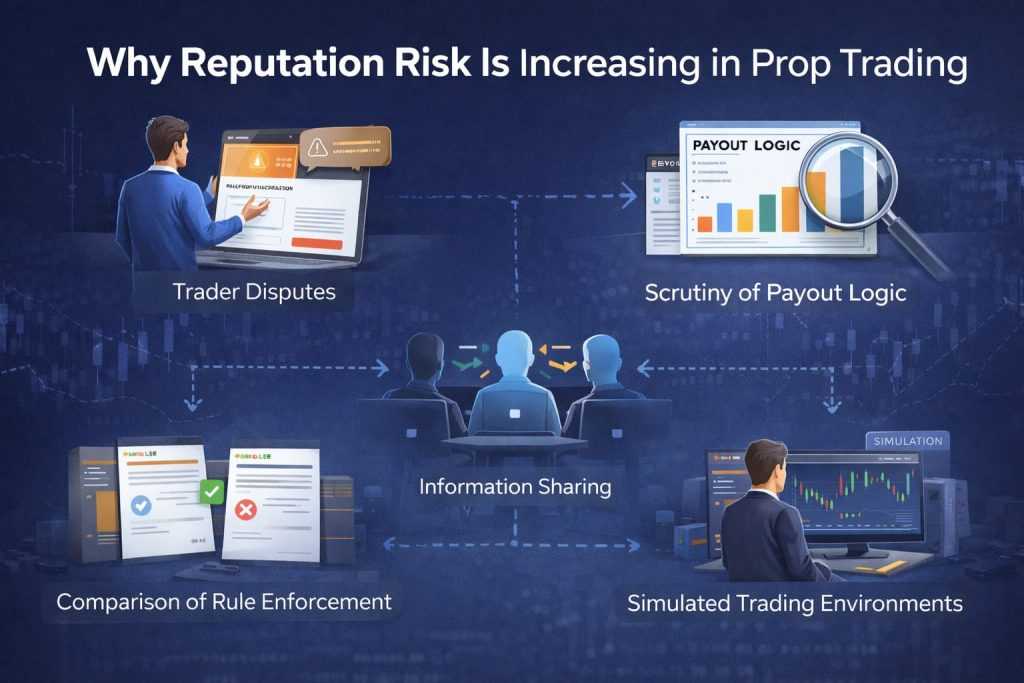
Why Reputation Risk Is Increasing in Prop Trading
As the prop trading market matures, traders have become more sophisticated in how they assess firms. Reputation is no longer formed solely through marketing presence or brand visibility. Instead, it is shaped by operational behavior and documented outcomes.
Key factors driving reputation risk include:
- Public visibility of trader disputes
- Increased scrutiny of payout logic
- Community-driven information sharing
- Comparison of rule enforcement across firms
- Greater awareness of simulated trading environments
This shift has made prop trading firm reputation a measurable operational risk rather than a subjective perception.
The Operational Drivers of Prop Firm Reputation
Reputation in proprietary trading is primarily determined by how consistently and transparently a firm operates. The most influential drivers include the following areas.
Risk Management Consistency
Inconsistent risk calculations are one of the most common sources of reputational damage. Disputes often arise from unclear drawdown logic, changing thresholds, or differences between equity-based and balance-based enforcement.
Structured prop firm risk management frameworks reduce reputational exposure by ensuring that:
- Risk rules are predefined and documented
- Enforcement logic is applied uniformly
- Violations are detected and addressed in real time
Rule Enforcement Transparency
Trader trust depends on predictability. When rules are enforced inconsistently or without explanation, firms risk accusations of bias or unfair treatment.
Effective rule enforcement transparency includes:
- Clear documentation of disqualification criteria
- System-driven enforcement rather than manual intervention
- Access to violation logs and historical trade data
Transparency does not eliminate disputes, but it significantly reduces reputational escalation.
Payout Logic and Dispute Handling
Payout-related disputes represent one of the highest-impact reputation risks for prop trading firms. Delays, unclear eligibility criteria, or insufficient documentation can undermine firm credibility.
Robust prop firm dispute management requires:
- Defined payout workflows
- Clear eligibility rules
- Audit-ready transaction records
- Structured communication during disputes
Firms that treat dispute resolution as a formal process experience lower complaint volumes and stronger trader trust.
Audit-Ready Decision Making
Auditability plays a critical role in reputation management. Firms that can demonstrate how and why decisions were made are better positioned to defend their actions publicly and internally.
Audit-ready controls support:
- Internal governance reviews
- Trader dispute resolution
- Platform integrity validation
- Long-term credibility
This level of prop firm operational integrity is increasingly expected by experienced traders.

Reputation Management vs Review Management
A common misconception is that reputation management for prop trading firms is equivalent to managing online reviews. While reviews influence perception, they are outcomes rather than root causes.
Review management focuses on:
- Responding to public feedback
- Encouraging positive testimonials
- Improving external visibility
Reputation management focuses on:
- Preventing disputes before they occur
- Ensuring consistent enforcement
- Maintaining transparent operational logic
- Aligning marketing claims with platform behavior
Sustainable reputation cannot be achieved through review activity alone. It is built through systems, governance, and execution discipline.
Preventing Reputation Damage Through Proactive Controls
Proactive reputation management for prop trading firms prioritizes prevention over response. This approach relies on operational design rather than post-incident communication.
Key preventive mechanisms include:
- Real-time monitoring of trading behavior
- Automated enforcement of risk rules
- Centralized logging of decisions and violations
- Standardized dispute resolution workflows
By identifying issues early and enforcing rules consistently, firms reduce both reputational risk and operational overhead.
Reputation as a Competitive Advantage
In an increasingly crowded market, reputation has become a differentiator. Firms with strong credibility attract higher-quality traders, experience fewer disputes, and benefit from stronger community advocacy.
Strategic benefits include:
- Improved trader acquisition efficiency
- Higher retention rates
- Reduced support and dispute costs
- Greater long-term sustainability
Conversely, firms with weak reputation management for prop trading firms face compounding challenges, including elevated churn and declining trust.
Conclusion
Reputation in proprietary trading is not shaped by messaging or branding. It is the outcome of consistent risk management, transparent rule enforcement, and audit-ready operations supported by robust prop firm solutions.
Effective reputation management for prop trading firms relies on governance frameworks that prioritize fairness, predictability, and accountability. Firms that invest in scalable prop firm solutions strengthen operational control, reduce disputes, and build durable trader trust in an increasingly demanding market.

Request a Consultation on Reputation Risk Management for Prop Firms
Get expert guidance on managing reputation as an operational and governance risk in proprietary trading. We’ll help you evaluate how risk logic, rule enforcement, payout workflows, and dispute handling influence trader trust and long-term credibility.
Together, we’ll review your operating model and outline a reputation management approach built on consistency, transparency, and documented decision-making.