


The foreign exchange market, commonly known as Forex, is the largest and most liquid financial market in the world. With trillions of dollars traded every day, many beginners and even experienced traders ask a simple but important question: Does anybody have centralized control of the Forex Market?
The short answer is: no single person, company, or government owns Forex or centralizes its transactions. However, the full explanation is far more interesting—and understanding it can help you trade smarter and with more confidence.
Does Anyone Own the Forex Market?
Unlike stock exchanges such as the NYSE or NASDAQ, Forex does not have a central owner or headquarters. It is a decentralized global market, meaning trading takes place electronically between participants all over the world.

Who Are the Main Participants in Forex?
- Central Banks. Central banks are the most powerful players in the Forex market. They control national currencies and influence exchange rates through monetary policy, interest rates, and market interventions. While they don’t “own” Forex, their actions can move markets dramatically.
- Commercial Banks and Financial Institutions. Large banks form the backbone of the Forex market. They trade currencies with each other, provide liquidity, and execute trades for clients. Much of the daily trading volume comes from these institutions.
- Governments and Treasuries. Governments participate indirectly by managing currency reserves and economic policy. In times of crisis, they may intervene to stabilize their national currency.
- Hedge Funds and Institutional Investors. These participants trade Forex for speculation, risk management, and portfolio diversification. Their large trade sizes can influence short-term price movements.
- Corporations. International companies use Forex to convert currencies for global business operations, imports, exports, and overseas investments.
- Retail Traders. Individual traders do not own Forex, but they are an important part of the ecosystem. Using online trading platforms and brokers, retail traders speculate on currency price movements.
Why Forex Has No Single Owner
Forex developed organically as global trade expanded. Because currencies belong to countries and trading happens worldwide, no central authority could realistically own or control the entire market.
Key reasons Forex has no owner:
- No central exchange
- Global participation across time zones
- Electronic interbank trading systems
- Independent currency sovereignty
This structure is what makes Forex highly liquid, accessible, and resilient.
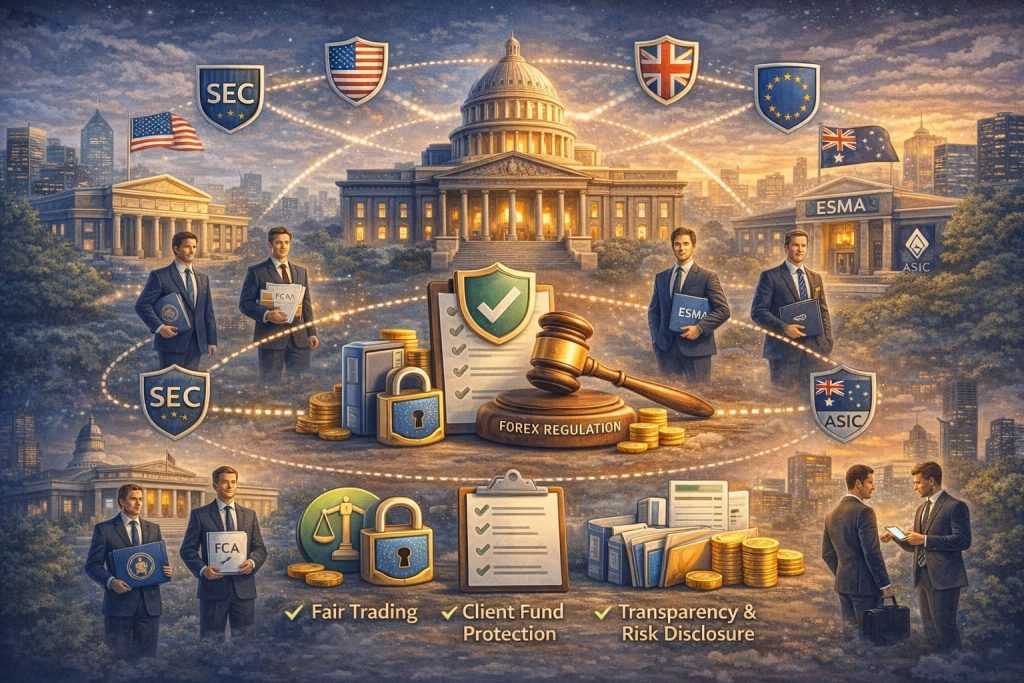
Who Regulates Forex If No One Owns It?
Although no one owns Forex, it is regulated at the national level. Each country enforces rules through financial authorities that oversee brokers and financial institutions.
Regulation helps ensure:
- Fair trading practices
- Client fund protection
- Transparency and risk disclosure
This is why choosing a regulated broker is essential for traders.
Can Forex Be Manipulated?
While no one owns Forex, certain participants can influence it temporarily. Large institutions, central banks, and unexpected economic events can cause volatility.
However, due to the sheer size of the market, long-term manipulation is extremely difficult. This is one reason Forex is attractive to traders worldwide.
To summarize:
- No single entity owns Forex
- It is a decentralized, global market
- Power is distributed among banks, institutions, governments, and traders
- Regulation exists, even without central ownership
Understanding who own forex — or rather, why no one does — helps traders better understand market behavior, risks, and opportunities.
Frequently Asked Questions (FAQ)
Who owns Forex?
No one owns the Forex market. It is a global, decentralized market where currencies are traded between banks, institutions, companies, governments, and individual traders. There is no single owner or controlling organization.
Is Forex controlled by banks?
Banks do not control Forex, but they play a major role in it. Large commercial and investment banks provide liquidity and execute the majority of currency transactions, which gives them strong influence on short-term price movements.
Do governments control Forex?
Governments do not control Forex. However, they influence their national currencies through economic policy, interest rates, and central bank decisions. In rare cases, they may intervene to stabilize their currency.
Who decides Forex prices?
Forex prices are determined by supply and demand. Factors such as economic data, interest rates, geopolitical events, and market sentiment all affect currency prices in real time.
Is Forex safe for individual traders?
Forex can be safe if traders use regulated brokers, manage risk properly, and understand how the market works. Like any financial market, it involves risk, and profits are never guaranteed.
Can one company manipulate Forex?
Because Forex is the largest financial market in the world, long-term manipulation by a single company is extremely unlikely. Short-term volatility can happen, but the market quickly corrects itself due to high liquidity.
Why doesn’t Forex have a central exchange?
Forex operates globally across different time zones and countries. A centralized exchange would limit its flexibility and accessibility, which is why it developed as a decentralized market.
Can beginners trade Forex?
Yes, beginners can trade Forex, but education is essential. Learning how the market works, practicing with demo accounts, and starting with small amounts can help reduce risks.
Request a Consultation on Understanding Forex Market Structure
Get expert guidance on how the Forex market actually works—from liquidity providers and institutions to brokers and retail participation. We’ll help you understand market structure, pricing dynamics, and the roles different participants play, so you can trade with clearer expectations and better risk awareness.
Together, we’ll review how Forex operates behind the scenes and how this knowledge can improve decision-making and confidence.