


A forex payment gateway is a core element of the financial infrastructure used by Forex brokers to process client deposits and withdrawals. In a highly regulated and risk-sensitive industry, payment processing is not just a technical function but a critical component of compliance, security, and operational stability.
This article explains how a payment gateway for forex brokers works, why specialized solutions are required, and what brokers should consider when selecting a reliable provider.
What Is a Forex Payment Gateway?
A payment gateway for forex is a secure technology solution that connects a broker’s trading platform with banks, card networks, and alternative payment service providers. It enables the processing of financial transactions while ensuring data protection, transaction transparency, and regulatory compliance.
Unlike standard e-commerce gateways, a forex payment gateway is designed to support:
- High transaction volumes
- Frequent deposits and withdrawals
- Multi-currency operations
- Elevated fraud and chargeback risks
These features are essential for brokers operating in global and regulated markets.
Why Forex Brokers Need Specialized Payment Gateways
Forex and CFD trading involve client funds, leveraged products, and strict regulatory oversight. As a result, generic payment processors are often unsuitable or unavailable for this sector.
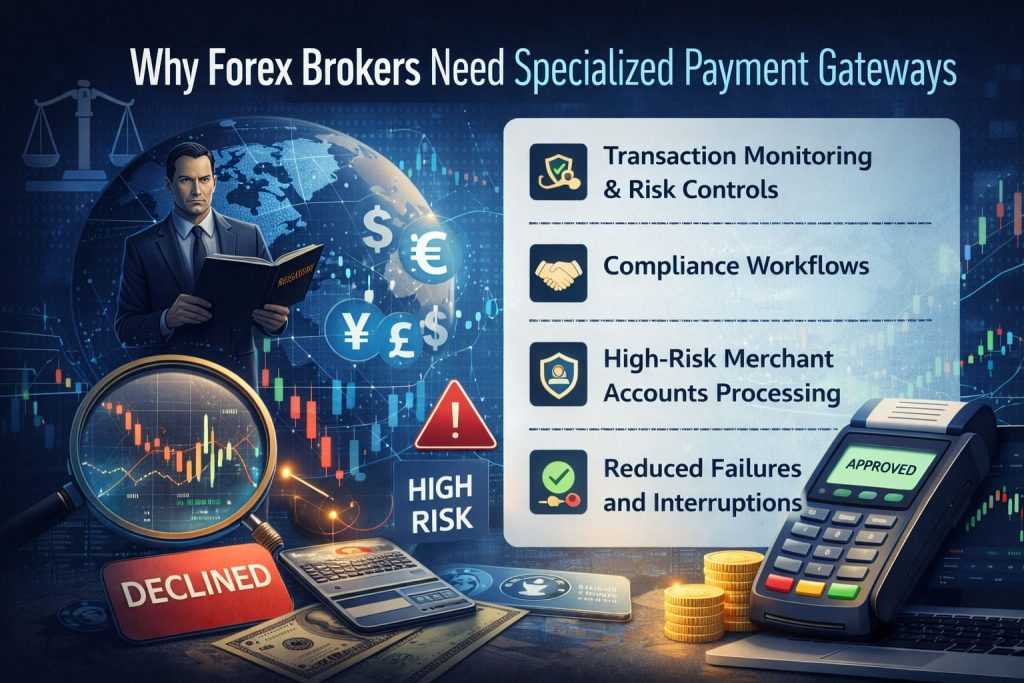
A professional payment gateway for forex brokers provides:
- Transaction monitoring and risk controls
- Support for compliance workflows
- Stable processing for high-risk merchant accounts
- Reduced payment failures and operational interruptions
Such specialization helps brokers maintain consistent payment performance and meet regulatory expectations.
Supported Payment Methods and Global Reach
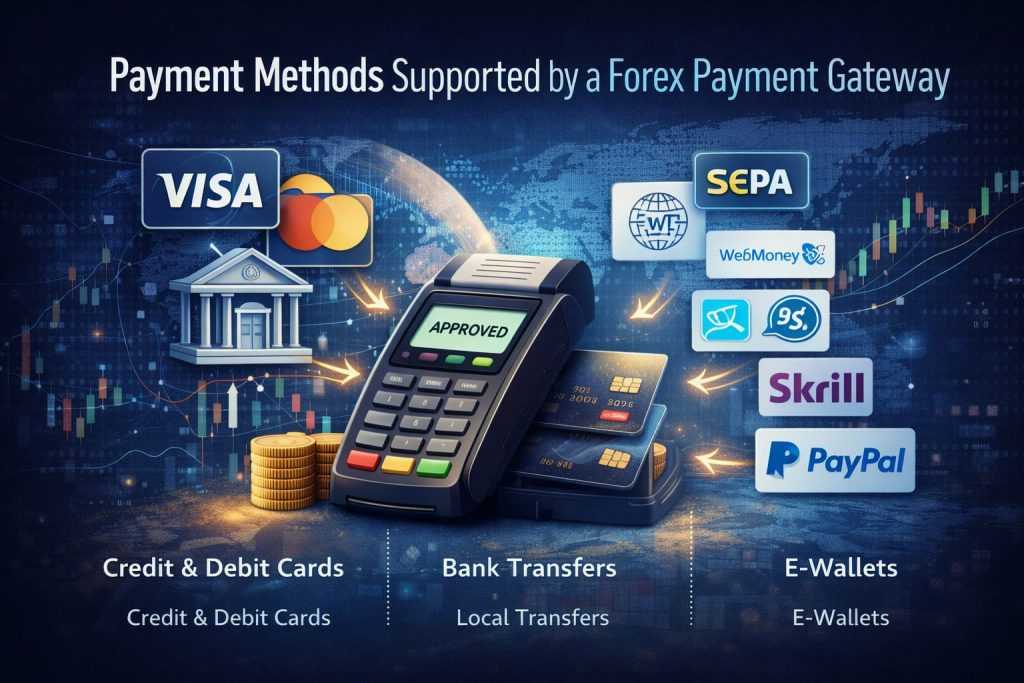
A modern forex payment gateway typically supports a broad range of payment methods, including:
- Credit and debit cards (Visa, Mastercard)
- International and local bank transfers (SWIFT, SEPA)
- Local payment methods (LPMs)
- E-wallets
Availability of payment methods may vary depending on jurisdiction, licensing structure, and banking relationships.
Compliance and Regulatory Considerations
Payment processing plays a direct role in a broker’s compliance framework. Reputable payment gateways for forex brokers operate in line with international financial standards, including:
- Client identification and verification procedures
- Anti-money laundering controls
- Transaction screening and reporting
- Secure handling of sensitive payment data in accordance with PCI DSS
Regulators often expect brokers to work with established and compliant payment service providers, as payment flows are closely linked to client fund protection.
Security and Risk Management
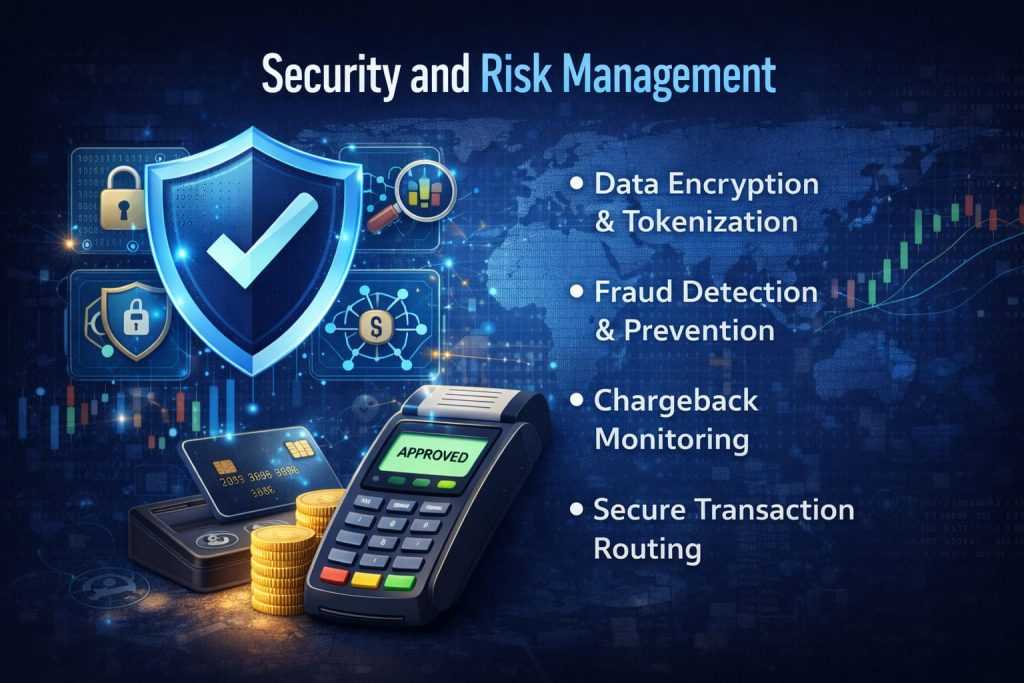
Security is a critical requirement for any forex payment gateway. Professional providers implement multiple layers of protection, such as:
- Data encryption and tokenization
- Fraud detection and prevention tools
- Chargeback monitoring and dispute management
- Secure transaction routing
These measures help reduce financial risk and protect both brokers and their clients.
Integration with Trading Platforms
Operational efficiency depends on seamless integration between payments and trading systems. A reliable payment gateway for forex brokers typically offers API-based integration with platforms such as MT4, MT5, cTrader, or proprietary solutions.
This enables:
- Real-time balance updates
- Automated reconciliation
- Accurate financial reporting
- Reduced manual processing
How to Choose a Payment Gateway for Forex Brokers
When selecting a payment gateway for forex, brokers should assess:
- Experience with Forex and CFD businesses
- Regulatory compatibility in target markets
- Transaction approval rates and processing stability
- Settlement terms and transparency
- Quality of technical and compliance support
A well-chosen payment partner supports long-term growth and operational resilience.
Conclusion
A forex payment gateway is a foundational component of a secure and compliant brokerage operation. The right payment gateway for forex brokers ensures reliable transaction processing, supports regulatory requirements, and strengthens client trust.
In an environment where payment reliability and financial transparency are essential, investing in a professional payment gateway for forex is a strategic decision that directly impacts business stability and reputation.
Frequently Asked Questions (FAQ)
What is a forex payment gateway?
A forex payment gateway is a specialized payment processing solution that enables Forex brokers to securely accept client deposits and process withdrawals. It connects trading platforms with banks and payment service providers while ensuring transaction security and compliance.
Why do Forex brokers need a specialized payment gateway?
Forex brokers operate in a regulated and high-risk financial environment. Standard payment processors often do not support the compliance controls, transaction volumes, or risk management requirements needed. A dedicated payment gateway for forex brokers is designed to meet these operational and regulatory needs.
What payment methods does a payment gateway for forex support?
A professional payment gateway for forex typically supports credit and debit cards, international and local bank transfers, local payment methods, and e-wallets. Supported methods depend on jurisdiction, licensing structure, and banking partnerships.
Are forex payment gateways compliant with regulations?
Reputable payment gateways for forex brokers operate in line with international compliance standards, including client verification, anti-money laundering controls, transaction monitoring, and PCI DSS requirements.
How does a forex payment gateway protect client funds?
A forex payment gateway protects client funds through encryption, tokenization, fraud detection tools, and chargeback management processes. These measures help reduce unauthorized transactions and financial risk.
Can a forex payment gateway be integrated with trading platforms?
Yes. Most professional payment gateways for forex brokers offer API-based integration with trading platforms such as MT4, MT5, cTrader, or proprietary systems, enabling real-time balance updates and automated reconciliation.
What should brokers consider when choosing a payment gateway for forex?
When selecting a payment gateway for forex, brokers should consider the provider’s industry experience, regulatory compatibility, transaction approval rates, settlement terms, security standards, and quality of technical and compliance support.
Request a Consultation on Payment Gateway Strategy for Forex Brokers
Get expert guidance on selecting and structuring a payment gateway strategy tailored to the Forex industry. We’ll help you evaluate compliance requirements, supported payment methods, risk controls, and settlement models to ensure stable and scalable payment operations.
Together, we’ll review your target markets and outline a payment infrastructure strategy that supports regulatory alignment, client trust, and long-term operational resilience.